Apr. 03, 2026
A grooved joint is a mechanical pipe connection using grooves and couplings
No welding or threading is required, making installation faster and easier
Widely used in fire protection, HVAC, and water supply systems
Available in rigid and flexible types for different applications
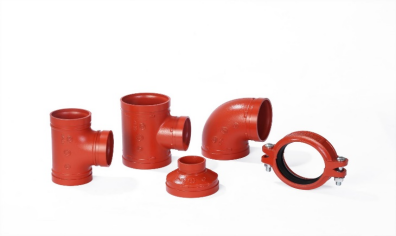
A grooved joint is a type of mechanical pipe connection that joins pipes using specially grooved pipe ends and a coupling. Instead of welding or threading, the system relies on a gasket and housing to create a secure and leak-tight seal.
Grooved joints are widely used in modern piping systems because they offer faster installation, flexibility, and ease of maintenance. They are especially common in fire protection systems, HVAC pipelines, and industrial water supply networks.
A grooved joint works by combining three key components: the grooved pipe ends, a gasket, and a coupling housing.
Grooving the pipe ends
The ends of the pipes are mechanically grooved to create a recessed channel.
Placing the gasket
A rubber gasket is placed around the pipe ends to ensure sealing.
Installing the coupling
The coupling housing is positioned over the gasket and tightened with bolts and nuts.
Securing the connection
Once tightened, the coupling locks into the grooves, forming a strong and flexible joint.
This design allows the joint to absorb vibration, accommodate slight misalignment, and maintain a reliable seal under pressure.
Grooved joints are generally divided into two main types based on their functionality:
A rigid grooved joint does not allow movement between pipes.
Features:
Provides strong, fixed connection
Suitable for straight pipe runs
Maintains alignment
Applications:
Fire protection piping
Industrial pipelines
A flexible grooved joint allows limited movement, deflection, and expansion.
Features:
Absorbs vibration and thermal expansion
Allows angular deflection
Reduces stress on the system
Applications:
HVAC systems
Long pipeline installations
Systems exposed to temperature changes
Grooved joints are commonly used in piping systems for the conveyance of water, air, gases, and other fluids. They offer several benefits over traditional threaded or flanged connections, including faster installation, easier maintenance, and greater flexibility.
Grooved joints are also commonly used in shaft connections, particularly in power transmission systems. In these applications, the grooved joint allows for quick and easy shaft connections and disconnections, without the need for special tools or expertise.
Grooved joints are a versatile and efficient method of connecting pipes or shafts in a variety of applications, offering benefits such as faster installation, easier maintenance, and greater flexibility.
Grooved joints have become increasingly popular due to their practical advantages over traditional connection methods.
No welding or threading is required, significantly reducing installation time and labor costs.
The system can be easily disassembled and reassembled, making repairs and modifications simple.
Flexible joints can absorb movement, reducing the risk of pipe damage.
The gasket ensures a leak-proof seal even under pressure.
Lower labor costs and reduced downtime make grooved systems highly economical.
Grooved pipe fittings are commonly used in a variety of fields and applications, including:
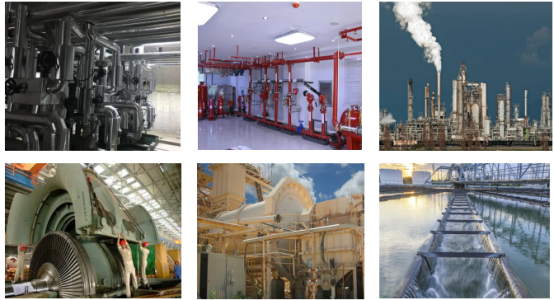
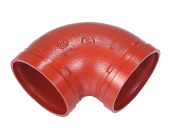
Grooved fittings are commonly used in commercial and industrial plumbing and heating, ventilation, and air conditioning (HVAC) systems for the conveyance of water, air, and other fluids.
Grooved fittings are widely used in fire protection systems, such as automatic sprinkler systems, for quick and easy installation and maintenance.
Grooved fittings are used in process piping applications, such as in chemical and petrochemical plants, for the conveyance of liquids and gases.
Grooved fittings are used in power generation plants, such as steam turbine plants, for the conveyance of steam and other fluids.
Grooved fittings are commonly used in water and waste treatment plants, such as water treatment plants, sewage treatment plants, and waste-to-energy plants.
Grooved fittings are used in mining and minerals processing plants, such as in conveyor systems and slurry pipelines.
In summary, grooved fittings are widely used in a range of industries and applications, offering benefits such as faster installation, easier maintenance, and greater flexibility compared to traditional threaded or flanged fittings.
Understanding how grooved joints compare to other connection types helps in selecting the right solution.
| Connection Type | Installation | Flexibility | Maintenance | Cost |
|---|---|---|---|---|
| Grooved Joint | Fast (no welding) | High (flexible type) | Easy | Low |
| Welded Joint | Slow | None | Difficult | High |
| Threaded Joint | Moderate | Low | Moderate | Medium |
| Flanged Joint | Moderate | Low | Easy | Medium |
Grooved joints offer the best balance of speed, flexibility, and cost-efficiency, making them ideal for modern piping systems.
Yes, grooved joints are highly reliable when installed correctly. They are widely used in critical systems such as fire protection, where performance and safety are essential.
The sealing mechanism, combined with high-quality materials, ensures long-term durability and resistance to leakage.
A grooved joint uses a mechanical coupling, while a welded joint permanently fuses pipes together. Grooved joints are faster to install and easier to maintain.
Our standard MOQ is usually around 5 tons, but it may vary depending on product type and project requirements. Mixed product orders are also available for suitable projects.
They are widely used in fire protection systems, HVAC pipelines, water supply systems, and industrial piping.
Yes, grooved joints are designed to handle high-pressure systems when properly installed and matched with the correct components.
Yes, one of the main advantages is that they can be disassembled and reused, making them ideal for maintenance and system upgrades.
A grooved joint is an efficient and reliable pipe connection method that has become a standard in modern piping systems. With advantages such as fast installation, flexibility, and ease of maintenance, it is widely used across industries including fire protection, HVAC, and water supply.
As industries continue to demand more efficient and cost-effective solutions, grooved joints remain a preferred choice for engineers, contractors, and distributors worldwide.
We provide a full range of malleable iron pipe fittings for distributors, contractors, and industrial projects worldwide.
To ensure stable production and competitive factory pricing, our typical minimum order quantity is around 5 tons, depending on product specifications and order combinations.
Mixed products and project-based inquiries are also welcome.
Contact us today to get:
- Product catalogs
- Competitive pricing
- Technical support
- Fast delivery solutions
SAFER
PRODUCT INFO
ABOUT JIANZHI
TECH DATA
Contact Us
E-mail: sales1@jianzhi-fitting.com
Tel: +86 15822792427
Office In Tianjin:
Heping District, Tianjin, China.
Production Base 1:
Chifeng, Inner Mongolia, China.
Production Base 2:
Tangshan City, Hebei Province, China.
Production Base 3:
Schelei Street,Baicoi City,Prahova County,Romania